


Pain management
to support recovery
Pain relief helps manage pain-related stress and supports a stable recovery.
Systemic analgesia
Systemic analgesia uses injectable or oral medication to manage pain effectively after surgery, during inpatient care and after discharge. There are many types of analgesic; we use opioids (butorphanol, morphine, remifentanil) and NSAIDs (meloxicam, carprofen, piroxicam), among others. Besides relieving pain throughout the body, they can also reduce inflammation and lower fever.Local & regional anesthesia
Local anesthesia numbs a specific part of the body with an injected drug (lidocaine, bupivacaine).
Combining local anesthesia with systemic analgesia is an effective multimodal approach to pain relief.
Local techniques include topical and infiltration anesthesia, epidurals and nerve blocks. For very painful operations — fractures, patellar luxation,
cruciate ligament rupture, limb amputation — we locate the target nerve with a nerve stimulator
(B. Braun Stimuplex) and block it to control pain during surgery.
Nerve blocks
A nerve block uses a nerve stimulator to place local anesthetic around a nerve, relieving pain in that region for a set period. We use nerve blocks for amputations, fractures, patellar luxation surgery, TPLO, general surgery, eye surgery and more.
Nerve blocks are performed under the guidance of experienced veterinarians trained in anesthesiology, with the anesthetic plan tailored to your pet's health.
Benefits of nerve blocks
- Pain control Reduces pain before and after surgery, which helps lower your pet's stress.
- Less anesthetic Some procedures can be done with lighter general anesthesia, reducing the amount of anesthetic used.
- Faster recovery Good pain control helps your pet recover faster after surgery.
Nerve block examples
- Sciatic nerve block
- Femoral nerve block
RUMM block
- Radial nerve block
- Ulnar nerve block
- Median nerve block
- Musculocutaneous nerve block
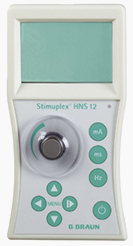
Nerve stimulator
Sciatic & femoral nerve block

